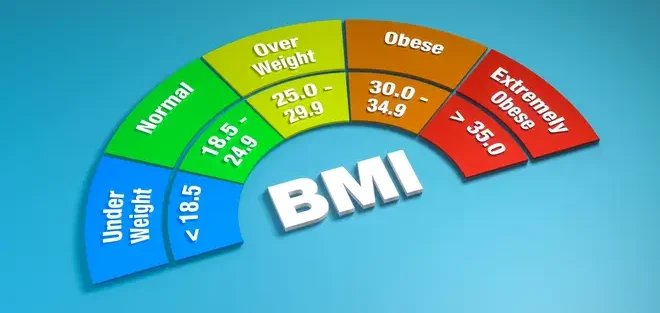
A measuring tool invented in 1832 by a Belgian mathematician has been used by the NHS for decades to decide whether someone is a healthy weight, overweight, or obese. It was never designed for clinical use. It was created to describe the average person in a population. Yet the Body Mass Index, better known as BMI, has become one of the most widely used tools in healthcare, sitting at the heart of how doctors, commissioners, and care providers think about weight.
In March 2026, a study published in the journal Nutrients confirmed what researchers have been pointing out for years: BMI is getting it wrong for a large number of people. For health and social care providers in England, this matters. BMI thresholds currently decide who gets access to weight management services, influence care needs assessments, and affect who qualifies for medication. A tool that misclassifies more than a third of the people it labels as obese is a tool that providers need to understand.
What the Study Found
Researchers in Italy, led by Professor Marwan El Ghoch from the University of Modena and Reggio Emilia, looked at 1,351 adults aged between 18 and 98. All of them had their body fat measured using a technique called dual-energy X-ray absorptiometry, or DXA. DXA is considered the most accurate way to measure body composition because it looks at fat, muscle, and bone separately rather than using a calculation based on height and weight alone.
When the researchers compared BMI results to DXA results, the gaps were significant. More than a third, specifically 34 per cent, of people labelled obese by BMI were in the wrong category and should have been classed as overweight. Over half, 53 per cent, of people labelled overweight by BMI were also misclassified. Of those, three quarters were actually normal weight when measured properly, while the remaining quarter should have been classified as obese. Even among people with a normal BMI, 22 per cent were placed in a different category by DXA, with some being underweight and others already carrying excess body fat without knowing it.
The researchers said healthcare staff should not rely on BMI alone and should combine it with other measures such as body fat percentage or waist size, particularly for people who appear to be in the normal weight range.
Why BMI Has Always Had Limits
BMI is simple to calculate. You divide a person’s weight in kilograms by their height in metres squared. All you need is a pair of scales and a tape measure. That simplicity is why it became so popular in clinical settings. The problem is that it cannot tell the difference between muscle and fat.
Someone who exercises regularly and has a lot of muscle will often have a high BMI even though they carry very little body fat and face none of the associated health risks. On the other hand, someone with a normal BMI who has very little muscle and a lot of fat around their middle may be at significant risk of diabetes, heart disease, and other conditions without any red flags being raised.
Age makes this worse. As people get older, they naturally lose muscle. Their weight and BMI can stay the same or even go down while their body fat increases. This means an older person in a care setting could have a completely normal BMI while their body composition is telling a very different clinical story.
NICE already acknowledges this. Its updated guidance from January 2025 says BMI should be used with caution because it does not directly measure where fat is stored in the body. NHS commissioning guidance for weight loss medications already applies a lower BMI threshold for people from South Asian, Black African, African-Caribbean, and other ethnic backgrounds, because research has shown that health risks appear at lower BMI levels in these groups. The system has already accepted in practice that BMI is an imperfect tool. The new study simply makes that clearer.
What This Means for People Using Care Services
The people that health and social care providers support are among those most likely to be poorly served by BMI-based assessments. Older adults, people with learning disabilities, people with long-term health conditions, and people who are not very mobile due to illness or disability all fall into groups where BMI is known to be least reliable.
For older adults living in care homes, this is a real day-to-day concern. Many residents may have a normal or even low BMI while carrying a level of body fat that increases their risk of falls, slow wound healing, and other complications. At the same time, a resident whose BMI puts them in the overweight category might be there because of muscle mass or fluid, not fat, and putting them on a weight reduction plan could actually do harm.
For people with learning disabilities, the picture is similarly complicated. Research consistently shows that this group has higher rates of obesity and more difficulty accessing weight management support. Many also find it harder to speak up during clinical assessments. If the BMI reading used to assess their weight is wrong, the care and support decisions that follow from it will be built on a shaky foundation.
The NHS and Commissioning Picture
The NHS spends around £11 billion a year on conditions linked to obesity. Access to specialist weight management services across England is currently decided largely by BMI thresholds. NICE criteria for tier 3 services and weight loss surgery both use BMI as a primary measure. The government and pharmaceutical company Lilly are backing a programme worth up to £85 million to expand access to obesity care through pharmacies and community settings, and that programme also uses BMI-based eligibility criteria.
The 2026 Italian study adds to a growing body of evidence asking whether these thresholds are identifying the right people. A tool that misclassifies 34 per cent of people it calls obese raises a straightforward question: are clinical resources going to the people who need them most?
For providers delivering reablement services, post-discharge support, or any care that involves nutrition and physical health, the practical question is whether the weight-related information in a service user’s care record is accurate. A reablement plan built on a BMI reading that does not reflect what is actually going on in that person’s body will not be as effective as it should be.
What Providers Should Do
NICE already says BMI should be combined with waist-to-height ratio for adults with a BMI below 35. The new research makes a stronger case for that combined approach and suggests that care staff who rely on BMI alone to make decisions about nutrition, health risk, or mobility may be missing part of the picture.
For providers delivering domiciliary care and supported living services, practical steps include making sure staff understand what BMI can and cannot tell them, that care plans look at the full picture of a person’s health rather than a single number, and that nutritional assessments use tools designed for the job, such as the Malnutrition Universal Screening Tool, rather than defaulting to BMI as the main indicator of risk.
Commissioners are increasingly looking for providers who can show they think carefully about the people they support, not just follow standard processes. A method statement that shows awareness of the limits of population-level screening tools, and explains how the provider uses a more complete approach to health assessment, sends a clear message about the quality of care being delivered.
AssuredBID
Clinical evidence changes, and the providers who keep up with it are the ones who write the strongest bids. Whether you are bidding for domiciliary care contracts, residential care placements, or supported living frameworks, showing that your care model reflects current evidence is one of the best quality signals you can send to a commissioner. Our bid management services help you put that into writing clearly and compliantly.
Book a free consultation at assuredbid.co.uk/book-a-consultation